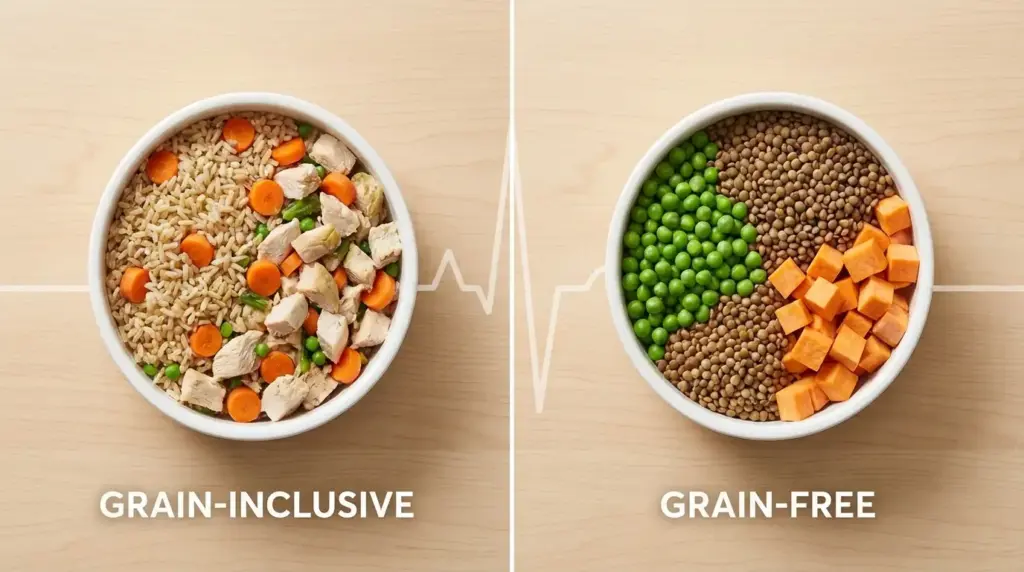

The rise of grain-free dog food in the early 2010s mirrored human dietary trends like Paleo and Keto. Marketed as a more “natural” way for dogs to eat, these diets replaced grains like corn and wheat with potatoes or legumes. However, the conversation shifted dramatically in 2018 when the FDA began investigating reports of Canine Dilated Cardiomyopathy (DCM) in breeds not genetically predisposed to the disease. DCM is a serious condition that weakens the heart muscle, making it difficult to pump blood effectively.
Between 2014 and 2022, the FDA received over 1,300 reports of DCM. The common denominator wasn’t just the absence of grain, but the high proportion of “pulse” ingredients—specifically peas, lentils, and chickpeas—listed in the top four ingredients of the food. These legumes are often used to boost protein content in grain-free formulations, but researchers now suspect they may interfere with how dogs process essential nutrients.
Understanding the “Pulse” Ingredient Theory
One of the primary theories involves taurine, an amino acid critical for heart function. While dogs can typically synthesize their own taurine from other amino acids found in meat, some researchers believe that high levels of legumes might inhibit this process or increase the excretion of taurine. In an FDA-led study of 107 dogs diagnosed with DCM, 90% were on grain-free diets, and 94% of those diets featured peas or lentils prominently.
The good news is that diet-related DCM appears to be partially reversible. In the same study, dogs that were switched to grain-inclusive diets showed significant improvement or full recovery. This has led many veterinarians to recommend caution. While peas and lentils are not “toxic,” their dominance in a dog’s daily intake is the point of concern. A 2023 study from the University of Guelph using Siberian huskies found no change in heart function after 20 weeks on a high-pulse diet, suggesting that breed genetics and long-term exposure also play a role.
Practical Advice for Dog Owners
If you are currently feeding a grain-free diet, there is no need to panic, but a proactive approach is wise. Many veterinarians now suggest a “rotation” strategy. By switching between different brands and protein sources—some grain-free and some grain-inclusive—you provide a broader spectrum of nutrients and reduce the risk of any single ingredient causing a deficiency or toxicity over time.
When reviewing your dog’s food, look at the first five ingredients. If peas or lentils appear multiple times (a practice known as “ingredient splitting”), the concentration may be higher than it seems. If you notice signs of reduced exercise tolerance, coughing, or fainting, consult your vet for a taurine blood test and an echocardiogram. The current consensus is that unless your dog has a confirmed allergy to specific grains, a balanced diet including grains like rice or barley is a safe and reliable choice for most breeds.